2026/11/02 11:57
福岡県新宮町の日本茶専門店、銘茶の里 森尾園です。
森尾園の人気商品「玉露白折」は、玉露の茎から生まれるお茶です。
Hello from Meicha no Sato Morioen, a Japanese tea shop in Shingu, Fukuoka.
Our popular Gyokuro Shiraore is a tea made from the stems of gyokuro.
Our popular Gyokuro Shiraore is a tea made from the stems of gyokuro.
今回は、そのもとになる「玉露」がどんなお茶なのかを、公的な資料をもとにご紹介します。
This time, based on official sources, we explain what gyokuro, the tea it comes from, actually is.
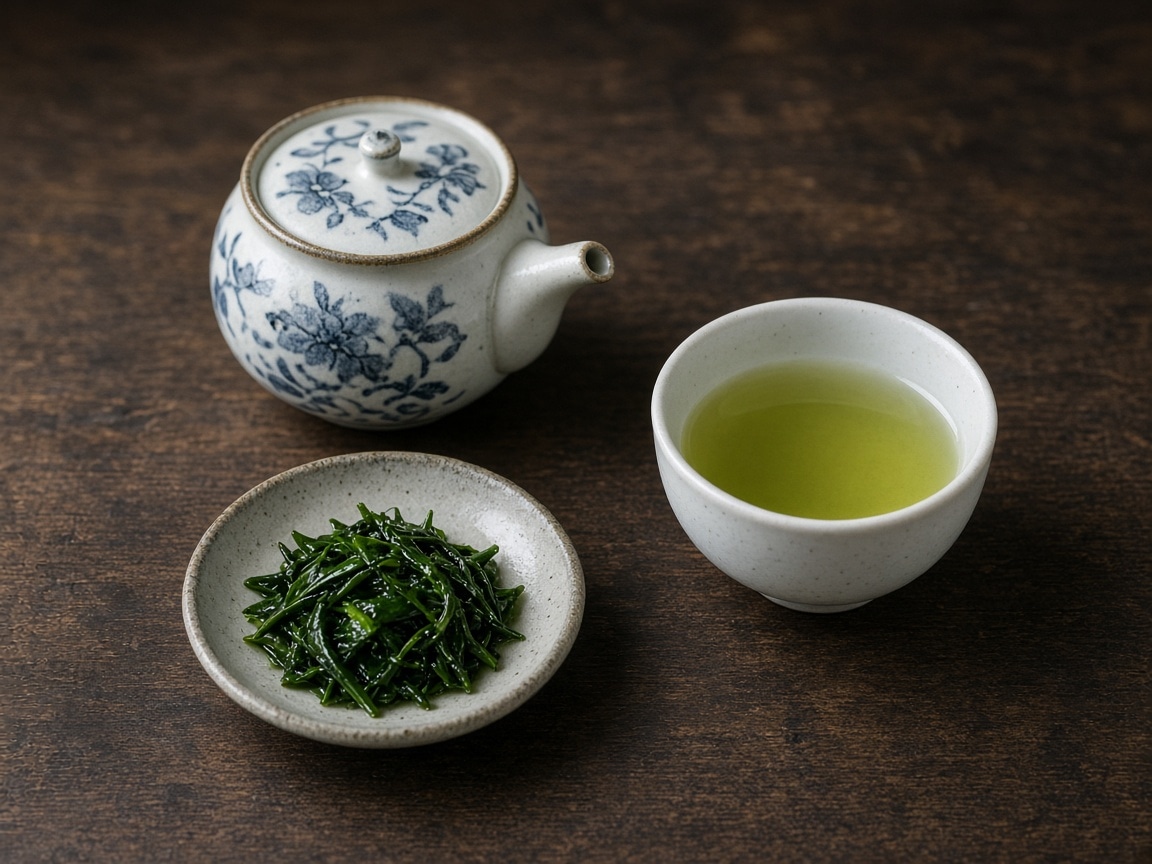
※イメージ写真 / Image for illustration
玉露とは:日光をさえぎって育てるお茶
日本茶業中央会の表示基準では、玉露は、一番茶の新芽が伸び出したころから、よしず棚などにコモや藁、寒冷紗などの覆いを20日ほどかけて育てたお茶とされています。
ほぼ完全に日光をさえぎった茶園(覆下園)から摘んだ茶葉を、煎茶と同じように作ります。
ほぼ完全に日光をさえぎった茶園(覆下園)から摘んだ茶葉を、煎茶と同じように作ります。
Under the Japan Tea Central Association's labelling standards, gyokuro is grown under covers of straw mats, straw or shade cloth on frames for about 20 days, starting when the first new shoots begin to grow.
The leaves are picked from these almost completely shaded fields and processed in the same way as sencha.
The leaves are picked from these almost completely shaded fields and processed in the same way as sencha.
JA全農ふくれんによると、玉露は4〜5月の一番茶の時期に作られ、一年に一度だけ生産されるお茶です。
According to JA Zen-Noh Fukuren, gyokuro is made during the first harvest in April and May, and is produced only once a year.
玉露と煎茶の違い
煎茶もかぶせ茶も玉露も、新芽を蒸して、揉んで、乾燥させて作ります。
大きく違うのは、摘む前に茶園を覆う期間です。
大きく違うのは、摘む前に茶園を覆う期間です。
Sencha, kabusecha and gyokuro are all made by steaming, rolling and drying new shoots.
The big difference is how long the field is covered before picking.
The big difference is how long the field is covered before picking.
農林水産省によると、かぶせ茶は1週間ほど、玉露は20日ほど覆って育てます。
同じように作るお茶でも、覆いの期間で呼び名が分かれます。
同じように作るお茶でも、覆いの期間で呼び名が分かれます。
According to the Ministry of Agriculture, kabusecha is shaded for about a week and gyokuro for about 20 days.
Teas made in the same way are named differently depending on how long they are shaded.
Teas made in the same way are named differently depending on how long they are shaded.
地理的表示の産品紹介では、玉露は、育てる間に覆いをかけることで「覆い香(おおいか)」と呼ばれる、青のりのような独特の香りを持つのが特徴とされています。
The GI product information explains that gyokuro, because it is shaded while growing, has a distinctive aroma called "ooika", reminiscent of green laver seaweed.
玉露は、茶葉の見た目にも特徴があります。
八女伝統本玉露の説明では、鮮やかな緑色で艶があり、細くよれた外観とされています。
八女伝統本玉露の説明では、鮮やかな緑色で艶があり、細くよれた外観とされています。
Gyokuro also has a distinctive look.
Traditional Authentic Yame Gyokuro is described as bright green and glossy, with thin, twisted leaves.
Traditional Authentic Yame Gyokuro is described as bright green and glossy, with thin, twisted leaves.
玉露の入れ方の目安
玉露は、煎茶よりぬるめのお湯で、少ない量をじっくり淹れるお茶です。
全国茶生産団体連合会の目安では、一人分で茶葉3g、お湯20ml、上級の玉露は50℃で2分30秒、普通の玉露は60℃で2分ほどです。
全国茶生産団体連合会の目安では、一人分で茶葉3g、お湯20ml、上級の玉露は50℃で2分30秒、普通の玉露は60℃で2分ほどです。
Gyokuro is brewed slowly with a small amount of water that is cooler than for sencha.
The National Federation of Tea Producers' Associations suggests 3 g of leaves and 20 ml of water per person: 50°C for about 2 minutes 30 seconds for high-grade gyokuro, and 60°C for about 2 minutes for regular gyokuro.
The National Federation of Tea Producers' Associations suggests 3 g of leaves and 20 ml of water per person: 50°C for about 2 minutes 30 seconds for high-grade gyokuro, and 60°C for about 2 minutes for regular gyokuro.
急須と湯のみは、ごく小さめのものが目安とされています。
JA全農ふくれんも、玉露のお湯の温度は50〜60℃、お湯の量は20mlほどと案内しています。
JA全農ふくれんも、玉露のお湯の温度は50〜60℃、お湯の量は20mlほどと案内しています。
A very small teapot and cups are suggested.
JA Zen-Noh Fukuren also recommends water at 50–60°C and about 20 ml for gyokuro.
JA Zen-Noh Fukuren also recommends water at 50–60°C and about 20 ml for gyokuro.
玉露の産地・八女と星野村
八女は、玉露の産地として知られています。
地理的表示の産品紹介によると、八女の星野村で、明治37年(1904年)ごろから本格的な玉露の生産が始まり、周りの山あいの地域へ広がっていきました。
地理的表示の産品紹介によると、八女の星野村で、明治37年(1904年)ごろから本格的な玉露の生産が始まり、周りの山あいの地域へ広がっていきました。
Yame is known as a gyokuro-producing region.
According to the GI product information, full-scale gyokuro production began in Hoshino Village, Yame, around 1904, and then spread to the surrounding hillside areas.
According to the GI product information, full-scale gyokuro production began in Hoshino Village, Yame, around 1904, and then spread to the surrounding hillside areas.
JA全農ふくれんは、冷涼で霧の深い山あいの地域で作られる玉露を「日本茶の最高峰」と紹介しています。
JA Zen-Noh Fukuren describes gyokuro grown in cool, misty mountain areas as "the pinnacle of Japanese tea".
また、福岡県の玉露は全国茶品評会で農林水産大臣賞を続けて受賞するなど、高い技術で知られています。
森尾園の創業者も、この八女・星野村の生まれです。
森尾園の創業者も、この八女・星野村の生まれです。
It also notes that Fukuoka's gyokuro is known for its high level of skill, winning the Minister of Agriculture's award at the National Tea Fair several years running.
Morioen's founder was also born in Hoshino Village, Yame.
Morioen's founder was also born in Hoshino Village, Yame.
地理的表示に登録された「八女伝統本玉露」
「八女伝統本玉露」は、平成27年(2015年)12月に、国の地理的表示(GI)保護制度に登録されました。
JA全農ふくれんによると、全国で7番目の登録です。
JA全農ふくれんによると、全国で7番目の登録です。
"Traditional Authentic Yame Gyokuro" was registered under Japan's Geographical Indication (GI) protection system in December 2015.
According to JA Zen-Noh Fukuren, it was the seventh product registered in Japan.
According to JA Zen-Noh Fukuren, it was the seventh product registered in Japan.
八女伝統本玉露は、稲わらなどの天然の資材で覆いをかけ、茶の木の自然な姿を生かす「自然仕立て」で育て、手で摘んで作られます。
一般的な玉露は化学繊維の資材で覆い、摘む面を半球状に整えるのに対し、昔ながらの方法を守っているのが特徴です。
一般的な玉露は化学繊維の資材で覆い、摘む面を半球状に整えるのに対し、昔ながらの方法を守っているのが特徴です。
Traditional Authentic Yame Gyokuro is shaded with natural materials such as rice straw, grown in the "natural" style that keeps the tea bush's natural shape, and picked by hand.
While gyokuro is generally covered with synthetic materials and its bushes trimmed into a dome shape, this tea keeps to the traditional methods.
While gyokuro is generally covered with synthetic materials and its bushes trimmed into a dome shape, this tea keeps to the traditional methods.
「すまき」と呼ばれる、稲わらや葦などを粗く編んだ資材も使われます。
こうした資材の編み手や製造機械は、産地にわずかに残るだけとされています。
こうした資材の編み手や製造機械は、産地にわずかに残るだけとされています。
A material called "sumaki", a coarse weave of rice straw and reeds, is also used.
Only a few people who can weave it, and few machines to make it, remain in the region.
Only a few people who can weave it, and few machines to make it, remain in the region.
玉露から生まれる「玉露白折」
玉露の茎から生まれるのが「玉露白折」です。
森尾園の玉露白折は、玉露の産地として有名な福岡県八女の玉露白折に、煎茶をブレンドして仕上げた、量産できない限定品です。
森尾園の玉露白折は、玉露の産地として有名な福岡県八女の玉露白折に、煎茶をブレンドして仕上げた、量産できない限定品です。
Gyokuro Shiraore is the tea made from the stems of gyokuro.
Morioen's Gyokuro Shiraore is a limited tea, made by blending shiraore from Yame, Fukuoka, a region famous for gyokuro, with sencha.
Morioen's Gyokuro Shiraore is a limited tea, made by blending shiraore from Yame, Fukuoka, a region famous for gyokuro, with sencha.
玉露はぬるめのお湯で淹れますが、玉露白折はポットのお湯(85〜90℃)くらいで淹れるとおいしく味わえます。
玉露とは淹れ方が違うので、ご注意ください。
玉露とは淹れ方が違うので、ご注意ください。
Gyokuro is brewed with cooler water, but Gyokuro Shiraore tastes good brewed at about 85–90°C, straight from a hot-water pot.
Please note that it is brewed differently from gyokuro.
Please note that it is brewed differently from gyokuro.
この玉露白折を自社の石臼で挽いたのが、森尾園の粉末茶です。
急須がいらず、お湯や水に溶かすだけで楽しめます。
急須がいらず、お湯や水に溶かすだけで楽しめます。
Our powdered tea is this Gyokuro Shiraore, ground in our own stone mills.
No teapot is needed; just stir it into hot or cold water.
No teapot is needed; just stir it into hot or cold water.
白折と粉末玉露については、こちらの記事でも詳しくご紹介しています。
We also write about shiraore and powdered gyokuro in more detail in these articles.
店舗のご案内
森尾園の店舗では、粉末茶の試飲と販売を行っています。
玉露白折の粉末茶の味わいを、ぜひ店頭でお試しください。
玉露白折の粉末茶の味わいを、ぜひ店頭でお試しください。
At the Morioen shop, we offer tastings and sales of our powdered tea.
Please come and taste our Gyokuro Shiraore powder.
Please come and taste our Gyokuro Shiraore powder.
〒811-0121 福岡県糟屋郡新宮町美咲2-6-2
営業時間 9:00〜18:00(土・日・祝日定休)
営業時間 9:00〜18:00(土・日・祝日定休)
2-6-2 Misaki, Shingu, Kasuya, Fukuoka 811-0121
Open 9:00–18:00 (closed Sat, Sun & national holidays)
Open 9:00–18:00 (closed Sat, Sun & national holidays)