2026/11/02 11:58
福岡県新宮町の日本茶専門店、銘茶の里 森尾園です。
森尾園では、八女・知覧・嬉野から茶葉を厳選して仕入れています。
Hello from Meicha no Sato Morioen, a Japanese tea shop in Shingu, Fukuoka.
We carefully select and buy our tea leaves from Yame, Chiran and Ureshino.
We carefully select and buy our tea leaves from Yame, Chiran and Ureshino.
今回は、九州のおもなお茶どころと、その特徴をご紹介します。
This time we introduce the main tea regions of Kyushu and what makes each of them special.
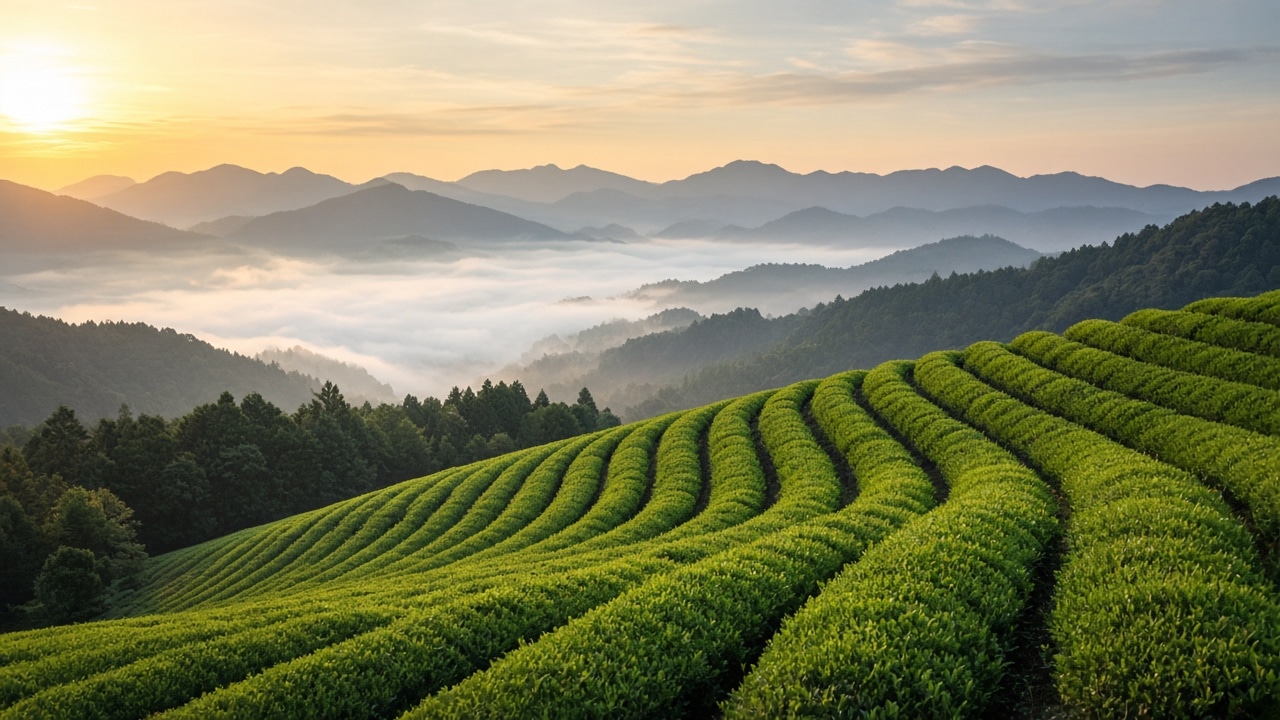
※イメージ写真 / Image for illustration
福岡県・八女茶
八女は、福岡県の南部にあるお茶どころです。
福岡県茶業振興推進協議会によると、福岡県の茶の栽培面積のうち約9割が八女地域にあります。
福岡県茶業振興推進協議会によると、福岡県の茶の栽培面積のうち約9割が八女地域にあります。
Yame is a tea region in the south of Fukuoka Prefecture.
According to the Fukuoka Tea Promotion Council, about 90% of the prefecture's tea-growing area is in the Yame region.
According to the Fukuoka Tea Promotion Council, about 90% of the prefecture's tea-growing area is in the Yame region.
八女茶の始まりは、室町時代の1423年とされています。
八女は玉露の産地としても知られ、「八女伝統本玉露」は国の地理的表示(GI)にも登録されています。
八女は玉露の産地としても知られ、「八女伝統本玉露」は国の地理的表示(GI)にも登録されています。
Yame tea is said to have begun in 1423, in the Muromachi period.
Yame is also known for gyokuro, and "Yame Dento Hon Gyokuro" is registered under Japan's Geographical Indication (GI) system.
Yame is also known for gyokuro, and "Yame Dento Hon Gyokuro" is registered under Japan's Geographical Indication (GI) system.
地理的表示(GI)産品の情報サイトによると、八女の星野村では明治37年(1904年)ごろから本格的な玉露の生産が始まりました。
森尾園の創業者も、この八女・星野村の生まれです。
森尾園の創業者も、この八女・星野村の生まれです。
According to the GI product information, full-scale gyokuro production began in Hoshino Village, Yame, around 1904.
Morioen's founder was also born in Hoshino Village, Yame.
Morioen's founder was also born in Hoshino Village, Yame.
佐賀県・嬉野茶
JAさがによると、うれしの茶は500年以上の歴史を持つお茶です。
1504年に明の陶工が釜を持ち込み、釜で茶葉を炒る製法を伝えたことが、嬉野の釜炒り茶の始まりとされています。
1504年に明の陶工が釜を持ち込み、釜で茶葉を炒る製法を伝えたことが、嬉野の釜炒り茶の始まりとされています。
According to JA Saga, Ureshino tea has a history of more than 500 years.
Its pan-fired tea is said to have begun in 1504, when a potter from Ming China brought an iron pan and the method of roasting tea leaves in it.
Its pan-fired tea is said to have begun in 1504, when a potter from Ming China brought an iron pan and the method of roasting tea leaves in it.
嬉野は、丸みを帯びた形の「玉緑茶」の産地です。
現在は、蒸して作る「蒸し製玉緑茶」が主流で、釜炒り茶は生産量の5%ほどと希少になっています。
現在は、蒸して作る「蒸し製玉緑茶」が主流で、釜炒り茶は生産量の5%ほどと希少になっています。
Ureshino is a region known for tamaryokucha, tea with rounded, curled leaves.
Today, steamed tamaryokucha is the main type, and pan-fired tea is rare, about 5% of production.
Today, steamed tamaryokucha is the main type, and pan-fired tea is rare, about 5% of production.
鹿児島県・知覧茶
南九州市によると、知覧茶は、南九州市の頴娃町・知覧町・川辺町で作られるお茶です。
市町村別の生産量では全国一で、国内生産量の約17%を占めるそうです。
市町村別の生産量では全国一で、国内生産量の約17%を占めるそうです。
According to Minamikyushu City, Chiran tea is made in the city's Ei, Chiran and Kawanabe districts.
It is said to be the largest producer among Japan's municipalities, with about 17% of national production.
It is said to be the largest producer among Japan's municipalities, with about 17% of national production.
知覧茶は、じっくりと蒸す深蒸し製法で作られ、淹れたときの深い緑色が特徴です。
南の地域のため茶摘みが早く始まり、摘む期間も長いので、多くの品種が育てられています。
南の地域のため茶摘みが早く始まり、摘む期間も長いので、多くの品種が育てられています。
Chiran tea is made by the fukamushi (deep-steaming) method and is known for its deep green colour when brewed.
Being in the far south, picking starts early and lasts a long time, so many cultivars are grown there.
Being in the far south, picking starts early and lasts a long time, so many cultivars are grown there.
長崎県・そのぎ茶
そのぎ茶は、長崎県のほぼ中央、大村湾に面した東彼杵町(ひがしそのぎちょう)で作られるお茶です。
東彼杵町によると、全国的には小規模な産地ながら、上質な「蒸し製玉緑茶」で知られています。
東彼杵町によると、全国的には小規模な産地ながら、上質な「蒸し製玉緑茶」で知られています。
Sonogi tea is made in Higashisonogi, a town facing Omura Bay near the centre of Nagasaki Prefecture.
According to the town, it is a small region nationally, but known for high-quality steamed tamaryokucha.
According to the town, it is a small region nationally, but known for high-quality steamed tamaryokucha.
近年は全国茶品評会の蒸し製玉緑茶の部で、産地賞を受賞するなど、注目を集めています。
幕末には、長崎の商人・大浦慶がイギリスなどへ日本茶を輸出し、近代の日本茶輸出の先駆けになったと紹介されています。
幕末には、長崎の商人・大浦慶がイギリスなどへ日本茶を輸出し、近代の日本茶輸出の先駆けになったと紹介されています。
In recent years, it has drawn attention by winning the region award in the steamed tamaryokucha category of the National Tea Fair.
In the late Edo period, Nagasaki merchant Oura Kei is said to have pioneered modern Japanese tea exports, shipping tea to Britain and elsewhere.
In the late Edo period, Nagasaki merchant Oura Kei is said to have pioneered modern Japanese tea exports, shipping tea to Britain and elsewhere.
「玉緑茶」が多いのも九州のお茶の特徴
嬉野とそのぎ、どちらの紹介にも出てくるのが「玉緑茶(たまりょくちゃ)」です。
農林水産省によると、玉緑茶は煎茶と違って、最後に形を細長く整える工程がないため、茶葉が丸みを帯びています。
農林水産省によると、玉緑茶は煎茶と違って、最後に形を細長く整える工程がないため、茶葉が丸みを帯びています。
Tamaryokucha appears in the descriptions of both Ureshino and Sonogi.
According to the Ministry of Agriculture, tamaryokucha skips sencha's final step of shaping the leaves into thin needles, so the leaves are curled and rounded.
According to the Ministry of Agriculture, tamaryokucha skips sencha's final step of shaping the leaves into thin needles, so the leaves are curled and rounded.
日本茶業中央会の定義では、蒸して作るものを「蒸し製玉緑茶」、蒸す代わりに炒って勾玉のような形に仕上げるものを「釜炒り製玉緑茶」としています。
同じ九州でも、知覧の深蒸し煎茶と、嬉野やそのぎの玉緑茶では、作り方が違うのです。
同じ九州でも、知覧の深蒸し煎茶と、嬉野やそのぎの玉緑茶では、作り方が違うのです。
The Japan Tea Central Association defines steamed tamaryokucha, and pan-fired tamaryokucha, which is roasted instead of steamed and shaped like a comma-shaped jewel.
So even within Kyushu, Chiran's deep-steamed sencha and the tamaryokucha of Ureshino and Sonogi are made in different ways.
So even within Kyushu, Chiran's deep-steamed sencha and the tamaryokucha of Ureshino and Sonogi are made in different ways.
産地の名前は「地域団体商標」に
ここで紹介した八女茶、うれしの茶、知覧茶、そのぎ茶は、いずれも地域団体商標に登録されています。
たとえば「うれしの茶」は、嬉野市を茶の発祥地とし、佐賀県と長崎県で生産・加工されたお茶とされています。
たとえば「うれしの茶」は、嬉野市を茶の発祥地とし、佐賀県と長崎県で生産・加工されたお茶とされています。
Yame tea, Ureshino tea, Chiran tea and Sonogi tea are all registered as regional collective trademarks.
For example, "Ureshino tea" is defined as tea produced and processed in Saga and Nagasaki Prefectures, with Ureshino City as its birthplace.
For example, "Ureshino tea" is defined as tea produced and processed in Saga and Nagasaki Prefectures, with Ureshino City as its birthplace.
九州の抹茶
九州の抹茶で知られる産地のひとつが八女です。
「八女抹茶」は地域団体商標にも登録されていて、八女市とその周辺で生産された荒茶を、福岡県内で仕上げた抹茶とされています。
「八女抹茶」は地域団体商標にも登録されていて、八女市とその周辺で生産された荒茶を、福岡県内で仕上げた抹茶とされています。
Yame is one of Kyushu's well-known matcha regions.
"Yame matcha" is registered as a regional collective trademark, defined as matcha finished in Fukuoka Prefecture from aracha produced in and around Yame City.
"Yame matcha" is registered as a regional collective trademark, defined as matcha finished in Fukuoka Prefecture from aracha produced in and around Yame City.
森尾園の「霊巌の華」は、八女の碾茶を石臼で丹念に挽いた八女抹茶です。
抹茶の読み方や、てん茶との違いは、こちらの記事でご紹介しています。
抹茶の読み方や、てん茶との違いは、こちらの記事でご紹介しています。
Morioen's "Reigan no Hana" is Yame matcha, made by carefully stone-grinding tencha from Yame.
See this article for how to read "matcha" and how it differs from tencha.
See this article for how to read "matcha" and how it differs from tencha.
産地のお茶を飲み比べ
同じ九州のお茶でも、産地によって作り方や形、味わいが違います。
森尾園では、八女の特上煎茶と嬉野の煎茶をご用意しています。
森尾園では、八女の特上煎茶と嬉野の煎茶をご用意しています。
Even within Kyushu, tea differs from region to region in how it is made, its shape and its taste.
At Morioen, we offer premium sencha from Yame and sencha from Ureshino.
At Morioen, we offer premium sencha from Yame and sencha from Ureshino.
八女特上煎茶は、さらりとした飲み口ながら味わいは濃く、後味も楽しめると、お茶好きの方に愛用されています。
嬉野煎茶は、あっさりとした味わいで、ファンの多いお茶のひとつです。
嬉野煎茶は、あっさりとした味わいで、ファンの多いお茶のひとつです。
Yame Premium Sencha is light on the palate yet full of flavour, with a finish loved by tea enthusiasts.
Ureshino Sencha has a light, clean taste and many devoted fans.
Ureshino Sencha has a light, clean taste and many devoted fans.
▶ 嬉野煎茶 80g
店舗のご案内
森尾園の店舗では、粉末茶の試飲と販売を行っています。
九州のお茶について、店頭でもお気軽にお尋ねください。
九州のお茶について、店頭でもお気軽にお尋ねください。
At the Morioen shop, we offer tastings and sales of our powdered tea.
Feel free to ask us about Kyushu tea in the shop.
Feel free to ask us about Kyushu tea in the shop.
〒811-0121 福岡県糟屋郡新宮町美咲2-6-2
営業時間 9:00〜18:00(土・日・祝日定休)
営業時間 9:00〜18:00(土・日・祝日定休)
2-6-2 Misaki, Shingu, Kasuya, Fukuoka 811-0121
Open 9:00–18:00 (closed Sat, Sun & national holidays)
Open 9:00–18:00 (closed Sat, Sun & national holidays)