2026/11/02 11:53
福岡県新宮町の日本茶専門店、銘茶の里 森尾園です。
寒くなってくると、温かいお茶とごはんの組み合わせが恋しくなりますね。
Hello from Meicha no Sato Morioen, a Japanese tea shop in Shingu, Fukuoka.
As the weather turns cold, there is nothing like warm tea and rice together.
As the weather turns cold, there is nothing like warm tea and rice together.
今回は、よく似ている「茶粥(ちゃがゆ)」と「お茶漬け」の違いをご紹介します。
どちらもお茶とお米の料理ですが、作り方と歴史に違いがあります。
どちらもお茶とお米の料理ですが、作り方と歴史に違いがあります。
This time we look at the difference between chagayu (tea rice porridge) and ochazuke (tea poured over rice).
Both combine tea and rice, but they differ in how they are made and in their history.
Both combine tea and rice, but they differ in how they are made and in their history.
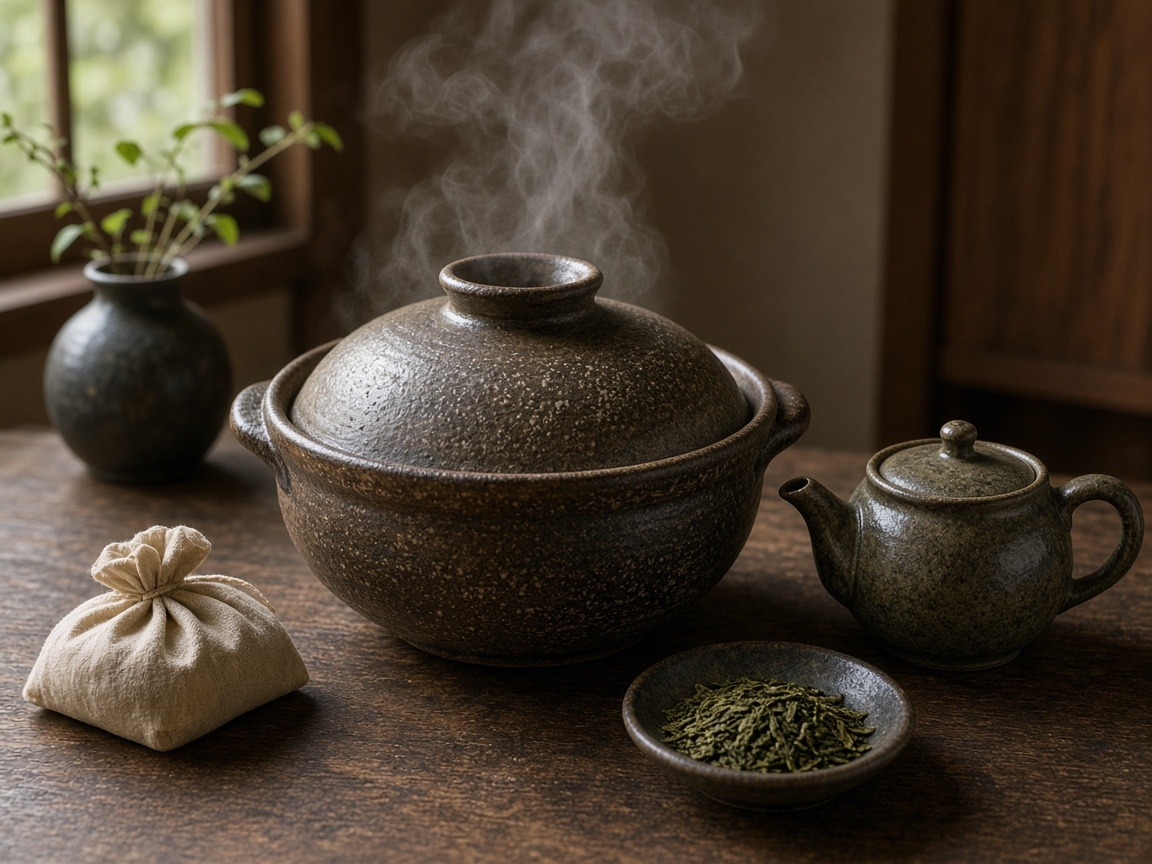
※イメージ写真 / Image for illustration
いちばんの違いは「炊く」か「かける」か
茶粥は、お茶でお米を炊いたおかゆです。
お茶漬けは、炊いたご飯にお茶をかけて食べる料理です。
お茶漬けは、炊いたご飯にお茶をかけて食べる料理です。
Chagayu is rice porridge cooked in tea.
Ochazuke is cooked rice with tea poured over it.
Ochazuke is cooked rice with tea poured over it.
つまり、お茶を「火にかけてお米と一緒に煮る」のが茶粥、「ご飯の上から注ぐ」のがお茶漬けです。
同じお茶とお米でも、作る手順がまったく違います。
同じお茶とお米でも、作る手順がまったく違います。
In other words, chagayu means simmering rice together with tea, while ochazuke means pouring tea over rice.
The ingredients are similar, but the steps are completely different.
The ingredients are similar, but the steps are completely different.
茶粥とは:奈良の「おかいさん」
農林水産省の「うちの郷土料理」では、奈良県の茶粥が紹介されています。
奈良の茶粥は「おかいさん」と呼ばれ、煮出したほうじ茶に冷やごはんを入れて炊いたもので、さらっとしているのが特徴です。
奈良の茶粥は「おかいさん」と呼ばれ、煮出したほうじ茶に冷やごはんを入れて炊いたもので、さらっとしているのが特徴です。
Japan's Ministry of Agriculture introduces Nara's chagayu in its collection of regional dishes.
Called "okaisan," Nara's chagayu is made by cooking leftover rice in brewed hojicha, and it is known for its light, thin texture.
Called "okaisan," Nara's chagayu is made by cooking leftover rice in brewed hojicha, and it is known for its light, thin texture.
同じページによると、奈良では夜にごはんを炊く家庭が多く、冷めたごはんを温かく食べる工夫として茶粥が広まったと考えられています。
ほうじ茶を煮出すときには、「ちゃんぶくろ」と呼ばれる木綿の茶袋が使われてきたそうです。
ほうじ茶を煮出すときには、「ちゃんぶくろ」と呼ばれる木綿の茶袋が使われてきたそうです。
The same page explains that many households in Nara cooked rice in the evening, and chagayu probably spread as a way to eat cold rice warm.
A cotton tea bag called a "chanbukuro" has traditionally been used to simmer the hojicha.
A cotton tea bag called a "chanbukuro" has traditionally been used to simmer the hojicha.
茶粥の歴史や森尾園の茶粥については、こちらの記事でもくわしくご紹介しています。
We also cover the history of chagayu and Morioen's version in more detail in this article.
お茶漬けとは:ご飯に熱いお茶をかける
公益財団法人 世界緑茶協会によると、お茶漬けは梅干しやたくあん、海苔などをのせたご飯に、熱いお茶をかけて食べるのが標準的なスタイルです。
全国には、魚など、いろいろな具をのせるお茶漬けがあります。
全国には、魚など、いろいろな具をのせるお茶漬けがあります。
According to the World Green Tea Association, the standard style of ochazuke is cooked rice topped with umeboshi, pickled radish or nori, with hot tea poured over it.
Across Japan, there are many versions topped with fish and other ingredients.
Across Japan, there are many versions topped with fish and other ingredients.
たとえば静岡県伊豆地域の「まご茶漬け」は、アジのたたきをご飯にのせ、お茶やお湯、温めただし汁をかけて食べる郷土料理です。
農林水産省の資料では、もともと漁師が船の上で食べていた料理と紹介されています。
農林水産省の資料では、もともと漁師が船の上で食べていた料理と紹介されています。
For example, "mago-chazuke" from the Izu area of Shizuoka is a local dish of chopped horse mackerel on rice, with tea, hot water or warm dashi poured over it.
The Ministry of Agriculture describes it as a dish originally eaten by fishermen on their boats.
The Ministry of Agriculture describes it as a dish originally eaten by fishermen on their boats.
歴史の違い:湯漬けと奈良茶
世界緑茶協会の解説では、平安時代には、冷えたご飯にお湯をかけて食べる「湯漬け」があったとされています。
お湯の代わりにお茶をかけるようになったのがお茶漬け、という見方があります。
お湯の代わりにお茶をかけるようになったのがお茶漬け、という見方があります。
The World Green Tea Association explains that in the Heian period, people ate "yuzuke," cold rice with hot water poured over it.
One view is that ochazuke arose when tea took the place of hot water.
One view is that ochazuke arose when tea took the place of hot water.
永谷園の解説によると、お茶が庶民に広まるにつれて、ご飯にお茶をかける習慣も広がりました。
江戸時代の江戸では、朝にご飯を炊き、夜はお茶を沸かして冷やご飯にかけて食べていたそうです。
江戸時代の江戸では、朝にご飯を炊き、夜はお茶を沸かして冷やご飯にかけて食べていたそうです。
According to Nagatanien, the habit of pouring tea over rice spread as tea became available to ordinary people.
In the Edo period, people in Edo boiled tea in the evening and poured it over cold rice.
In the Edo period, people in Edo boiled tea in the evening and poured it over cold rice.
一方で、江戸時代初期の料理書『料理物語』には、栗や芋などを米と一緒にお茶で煮込んだ「奈良茶」が出てきます。
茶粥に近い、お茶で煮るお米の料理も古くからあったのです。
茶粥に近い、お茶で煮るお米の料理も古くからあったのです。
On the other hand, an early Edo-period cookbook, Ryori Monogatari, describes "Nara-cha," rice simmered in tea with chestnuts, potatoes and more.
So dishes of rice cooked in tea, close to chagayu, also have a long history.
So dishes of rice cooked in tea, close to chagayu, also have a long history.
食べたときの違い
茶粥はお米をお茶で炊くので、お米にお茶の香りと色がしみこみます。
奈良の茶粥のように、さらっとした仕上がりになるものもあります。
奈良の茶粥のように、さらっとした仕上がりになるものもあります。
Because chagayu is cooked in tea, the rice takes on the tea's aroma and colour.
Some, like Nara's chagayu, turn out light and thin.
Some, like Nara's chagayu, turn out light and thin.
お茶漬けは、炊いたご飯にお茶をかけてすぐに食べるので、ご飯の粒の形がそのまま残ります。
のせる具によって、味わいががらりと変わるのも楽しいところです。
のせる具によって、味わいががらりと変わるのも楽しいところです。
Ochazuke is eaten right after the tea is poured, so the grains of rice keep their shape.
Part of the fun is how much the flavour changes with the toppings.
Part of the fun is how much the flavour changes with the toppings.
「玄米茶粥の素」はどっち?
森尾園の「玄米茶粥の素」は、八女玉露白折を石臼で挽いた粉末茶を、玄米にブレンドした茶粥の素です。
お湯を注ぐだけで、茶粥として楽しめます。
お湯を注ぐだけで、茶粥として楽しめます。
Morioen's Genmai Chagayu Mix is brown rice blended with our stone-ground Yame Gyokuro Shiraore powder.
Just pour hot water over it to enjoy it as chagayu.
Just pour hot water over it to enjoy it as chagayu.
お鍋で炊かずにお湯を注ぐという手順は、お茶漬けに近いかもしれません。
お湯を注ぐと、サクサクだった玄米がしっとりとなじみ、やさしい香りの茶粥に変わります。
お湯を注ぐと、サクサクだった玄米がしっとりとなじみ、やさしい香りの茶粥に変わります。
Pouring hot water instead of simmering is perhaps closer to how ochazuke is made.
Once the water is added, the crunchy brown rice softens and turns into a gently fragrant chagayu.
Once the water is added, the crunchy brown rice softens and turns into a gently fragrant chagayu.
森尾園の先代は、粉末茶をご飯にかけ、お湯を注いでさらさらと食べていたそうです。
その食べ方をヒントに生まれたのが、この玄米茶粥の素です。
その食べ方をヒントに生まれたのが、この玄米茶粥の素です。
Morioen's previous owner used to sprinkle powdered tea over rice, pour on hot water and eat it.
That habit inspired this Genmai Chagayu Mix.
That habit inspired this Genmai Chagayu Mix.
原材料は玄米と緑茶(福岡県古賀市、八女市)です。
茶粥のほか、ヨーグルトやバニラアイスのトッピングにもおすすめです。
茶粥のほか、ヨーグルトやバニラアイスのトッピングにもおすすめです。
The ingredients are brown rice and green tea (from Koga and Yame, Fukuoka).
Besides chagayu, it is also delicious sprinkled over yogurt or vanilla ice cream.
Besides chagayu, it is also delicious sprinkled over yogurt or vanilla ice cream.
はじめての方には、3gの単品もご用意しています。
For first-timers, we also offer a single 3 g pack.
まとめ
茶粥はお茶でお米を炊く料理、お茶漬けはご飯にお茶をかける料理です。
どちらも、お茶とお米を一緒に味わう、日本で長く親しまれてきた食べ方です。
どちらも、お茶とお米を一緒に味わう、日本で長く親しまれてきた食べ方です。
Chagayu is rice cooked in tea, and ochazuke is tea poured over rice.
Both are long-loved Japanese ways of enjoying tea and rice together.
Both are long-loved Japanese ways of enjoying tea and rice together.
寒い朝や、少しだけ何か食べたいときに、温かいお茶とお米の一杯をどうぞ。
On a cold morning, or when you just want a little something, try a warm bowl of tea and rice.
店舗のご案内
森尾園の店舗では、粉末茶の試飲と販売を行っています。
玄米茶粥の素の原料にもなっている粉末茶を、ぜひ店頭でお試しください。
玄米茶粥の素の原料にもなっている粉末茶を、ぜひ店頭でお試しください。
At the Morioen shop, we offer tastings and sales of our powdered tea.
Please come and try the powdered tea that also goes into our Genmai Chagayu Mix.
Please come and try the powdered tea that also goes into our Genmai Chagayu Mix.
〒811-0121 福岡県糟屋郡新宮町美咲2-6-2
営業時間 9:00〜18:00(土・日・祝日定休)
営業時間 9:00〜18:00(土・日・祝日定休)
2-6-2 Misaki, Shingu, Kasuya, Fukuoka 811-0121
Open 9:00–18:00 (closed Sat, Sun & national holidays)
Open 9:00–18:00 (closed Sat, Sun & national holidays)